



Description
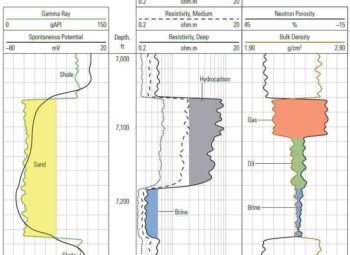
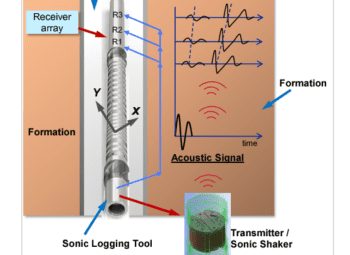
Well logging is an important contributor to formation evaluation. The objectives of formation evaluation include assessing resource size, supporting the placement of wells, and interpreting reservoir performance during development. Logging tools can be designed to measure such physical quantities as electromagnetic and sonic wave signals that pass through a section of the formation and detect elementary particles emitted by formation rock.
Importance of well logging
There are many benefits to well logging. A well log is a record of the changes in rock formations and fluid content that are encountered while drilling a well. The importance of well logging data in reservoir characterization and development cannot be overstated. Accurate well logging data is critical in order to understand the subsurface geology, which in turn is necessary for finding and developing oil and gas reservoirs. Without well logging data, it would be very difficult, if not impossible, to find and develop these reservoirs. In addition, well logging data is also important in monitoring reservoir performance and identifying potential problems.
Types of well logging
- Products
- Cement Evaluation
- Casing Integrity
- Casing Integrity
- Formation Evaluation
- ✓ Cement Evaluation
- ✓ Casing Integrity
- ✓ Pipe Recovery
- ✓ Production Logging
- ✓ Formation Evaluation
- ✓ Sonic Logging
- ✓ Formation Testing
- ✓ Induction Logging
- ✓ Resistivity Logging
- ✓ Nuclear Logging
- ✓ Different Types of Guns
- ✓ Advanced Perforation Technologies
Ultrasonic Scan Imaging Tool
Radial Bond Tool
- Ultrasonic Scan Imaging Tool
- Multi-Finger Imaging Tool
- Magnetic Thickness Detector
- Reservoir Performance Monitor
- Short Combination Production Logging Tool
- Multi-Array Production Services